Friday, April 17, 2015

Love Means (Often) Having To Say I'm Sorry

Yes, this church is made of exactly what you think it is made of.


 Warning – incoming honesty missile. This may be TMI on my relationship with my husband, but here goes. Trust me, I'm not telling you anything he doesn't know.

The biggest issue I am having with my dear spouse right now is that sometimes, I just want an apology. You know, when you mention something that bugged you, or something that didn't get done that was promised? And the response is, “But I . . .” “Well I did that because . . .” or “If you hadn't . . .”

I really, really hate that response. Here is the truth of our conflict. I don't need to be right. I don't require a lifetime commitment to change. I just desperately want to hear “I'm sorry,” with no excuses. I want to know my concerns and needs have been heard.

Defensiveness makes me crazy. (Plus, I am really good at it.)

Hearing words that immediately defend, justify, or condescend does things to a human soul. Words and actions of defensiveness shut down all potential communication. Any relationship that may have developed dies. They say, “I don't want to hear your heart.” “Your experience is invalid.” “My need to be right outvalues your need to be recognized.”

Should that make us think?
Imagine actually saying those things to another human being.

Yet that is exactly what a lot of us church people do. We don't use those precise words, but we might as well. What is true for us interpersonally in our closest relationships is true in all relationships – when we put up our defenses first, we lose all possibility of hearing another person's heart. When we refuse to hear, we refuse to be the image of God we were created to be.

Because God is all about seeing and hearing. Always.

God is given the name “The God who sees” almost from the beginning (Genesis 16). In the same verses, He declares that he is also the God who hears. From the very first covenant with His people, God sets himself up as the One who sees and hears his people. And for God, these are active verbs. They mean to deeply see, to recognize, to delve for need and hope and hurt and to provide for their remedy.

God is not the spouse who nods and assents, “Yep, I hear you,” all the while checking text messages and Buzzfeed. God is the one who looks you in the eye and sits until it's all out there, vulnerable and raw, and then begins to heal. That's his version of hearing.

How good are we at that?

  • Jesus saw the woman at the well's thirst, when no one, never mind Jewish men who were not “supposed” to see her, would look her way.
  • Peter heard Cornelius' faith when by law he should not have stepped into his house.
  • God saw a lonely, homeless, hopeless single parent (Hagar) when those responsible for her refused to take responsibility.
  • Jesus saw Zaccheus' shame when his neighbors overlooked and despised him.
  • God heard Hannah's pleas when no one listened to a woman in pain.


We must see and hear, too.

In all the sins that have been recently cast on the church, deserved or not, the common denominator seems to be this defensiveness. We are so busy defending ourselves, we forget that Jesus never told us to do that.

In this world you will have trouble.

But to you who are willing to listen, I say, love your enemies! Do good to those who hate you. Bless those who curse you. Pray for those who hurt you. If someone slaps you on one cheek, offer the other cheek also. If someone demands your coat, offer your shirt also. Give to anyone who asks; and when things are taken away from you, don’t try to get them back. Do to others as you would like them to do to you.

If you love only those who love you, why should you get credit for that? Even sinners love those who love them! And if you do good only to those who do good to you, why should you get credit? Even sinners do that much! And if you lend money only to those who can repay you, why should you get credit? Even sinners will lend to other sinners for a full return.
Love your enemies! Do good to them. Lend to them without expecting to be repaid. Then your reward from heaven will be very great, and you will truly be acting as children of the Most High, for he is kind to those who are unthankful and wicked. You must be compassionate, just as your Father is compassionate. (Luke 6.27-36)

It seems Jesus told us, repeatedly, to do quite the opposite of defending ourselves. But still, we don't get it.

I understand. It's so counterintuitive to what we believe. All that we've been told. Everything that screams the American way. We've been immersed in a culture of rights, independence, and individualism our entire lives. We equate it with “right” naturally, because it's all we've ever known. That's what all people everywhere do. Humans see what is as what should be, because no one else's reality has ever been part of their experience.

Unfortunately, that means white, (usually male), American Christians most often see the status quo that retains their position as what is right. It is what has always been. How would we know any different?

The only way to know is to listen. To hear. To see. To look someone else in the eye and say, “I want to know what your experience is. And I want to keep my mouth shut while you tell me.”

I know this is true because it's true in my own house. And human relationships are all basically the same. We just want to be heard.

In the last few months, how many issues have drawn the defensive shots of Christians?

*Millennials are leaving the church? Well, they just want a watered down gospel. They're looking for weak truth, and we aren't compromising.

*Gay people want wedding cakes or photos? They're targeting and persecuting us for our beliefs.

*People of color still believe white privilege exists? They're delusional hoodlums.

*Christians should be accountable for their historic atrocities? How dare anyone suggest that? We don't go around starting holy wars or abducting people and enslaving them. Now.

Here's a radical response: What if all many of these people really want is to be heard?

What if they're not saying Christians today are responsible for it all? What if they're not demanding we find a solution? What if they're not insisting we agree? What if they don't need a lifelong commitment to change our ways but simply a recognition that this is their experience? And it's worth hearing?

What if my knee-jerk reaction was not to defend my way of life but to be the image-bearer of God, to be the eyes and ears of the One who sees and hears?

You are someone worth listening to. My need to be right does not outvalue your need to be recognized. I see you as a fellow image of God. And however flawed we both may be, the one thing I must commit to is “acting as a child of the Most High, and being compassionate, just as (my) Father is compassionate.”

Acting as His child is irrevocably linked to acting with compassion. Jesus would not separate them, and He did not put my rights above that command. if I find one thing necessary to defend, that could be it.


Thursday, April 16, 2015

The President's Topic for Another Day

What it took to make mention of Christians.

“On Easter, I do reflect on the fact that as a Christian, I am supposed to love. And I have to say that sometimes when I listen to less-than-loving expressions by Christians, I get concerned. But that’s a topic for another day.”

These words were spoken by our president at a gathering of clergy. Just four days earlier he offered a written statement to the people of Kenya following the massacre at a college. Here’s a small part of his letter:

“This much is clear: the future of Kenya will not be defined by violence and terror; it will be shaped by young people like those at Garissa University College – by their talents, their hopes, and their achievements. “

That much was clear. What seemed to be unclear, or at least unmentionable was that this was an attack against Christians by Muslim extremists. Here on this blog, I’ve addressed viewing all Muslims as terrorists. I know they’re not all out to kill Christians. But some of them are, and the members of al-Shabab who came to Garissa were among that classification. The president’s statement appeared to suggest the “scourge of terrorism” had no defined agenda.

In a radio broadcast soon after the attack, a spokesman for al-Shabab claimed elected leaders are using the university in their “plan to spread Christianity and infidelity.” Sending a clear message to the Kenyan government, the terrorists went from dorm to dorm separating Christians from Muslims. The Christians were lined up and executed. One hundred forty-seven of them.

The president not only failed to mention the religion of the victims, he did not identify the murderers as Muslim. They were just a bunch of weapon-wielding thugs attacking a bunch of book-toting kids. I’ll admit that’s bad enough, no matter who died at the hands of these killers. It was horrible. Victims, according to some reports, were brutalized beyond recognition. But it's no secret al-Shabab had particular victims in mind. Would the same vague message of hope and promise have gone out if the terrorists were Christians and the victims were…anyone at all?

It’s not the first failure to fully recognize the victims and appropriately identify the killers. After an attack on a Kenyan quarry in December ended the lives of thirty-six Christians, the White House issued a similar statement. Plenty of sorry and support. No mention of the religious affiliation of either the dead people, or of the killers who separated Christians from their Muslim co-workers and murdered them. Since April of 2013, over 400 Kenyan Christians have been slaughtered by al-Shabab. This latest attack made headlines. For a day or two. And it required a sympathy card from the president.

Perhaps the message to a nation grieving the loss of murdered young people shouldn’t be filled with pointing fingers and flying arrows. Maybe it should just express sorrow and hope. Yes, maybe it was enough to offer condolence without making a truthful statement about what really happened.

But if it was enough, didn’t that meeting the president addressed only days later deserve the same respect? He could have just thanked the attendees for their good work. For their charity. Even for their love. He could have spoken a peaceful blessing. Instead, he threw a punch. As a Christian, he says he’s supposed to love. If he speaks the truth, he ought to love his own people—Christians—a little more expressively. His heart ought to be cut a little deeper for his fellow believers who are persecuted and murdered. And as the leader of this formerly Christian nation, he ought to call it what it is. If not in his sympathy note, then at least at this meeting where the attendees were primarily Christian.

I don’t know every word spoken at the meeting. I only know the president’s Christian love critique became of matter of public discussion. I hope he also mentioned those who were recently slaughtered in Kenya. That they died because they followed Christ. That their selection was not random.

I hope he was able to express enough love for the family of God to speak the truth.


Tuesday, April 14, 2015

THE CONSEQUENCES OF IGNORANCE


"Are you not in error because you do not know the Scriptures or the power of God?"


Ignorance is the lack of knowledge or lack of awareness. Ignorance can be very costly in many different ways, depending on what one is unaware of. A good example of the consequences of ignorance is what might happen if you were careless about your mail. Imagine being in a difficult financial situation, and unable to make ends meet. You think a little extra money will improve your situation. Suddenly, you discover that you’ve been named as the recipient of a large sum of money in the will of a deceased loved one. Your sucking life is about to change for the better. But how beneficial would that money be if you were unaware it existed, because you misplaced or never opened the notification letter that came from the executor?
Ignorance could also hurt you if you neglect to take medications as prescribed by your doctor, because you don’t quite understand the importance of following the directions. Even though you take the medication, your health may not improve if you do not take the prescribed dose at the prescribed time.
The same thing can happen to Christians. We have been named in God’s will; after all, we are joint heirs with Christ (See Romans 8:17). Our inheritance is spelled out clearly in His Word, the Bible. However, when we neglect to read it, we miss out on our blessings and go through unnecessary defeat and frustrations. Scripture reminds us, “My people are destroyed from lack of knowledge” (Hosea 4:6 NIV84).
The Sadducees, not believing in the resurrection from the dead, tried to trap Jesus with what they thought was an ingenious scenario. According to the Jewish law at the time, if a man died childless, his brother was expected to marry the widow and have children for the deceased. The Sadducees made up a story to illustrate a dilemma in which they hoped to trap Jesus in His response. The gist of the story was that, based on the law, seven brothers were all husbands to one woman at different times in her life. The Sadducees asked which of these brothers would be her husband in the resurrection. They couldn’t wait to hear Jesus’s response. They thought they had Him where they wanted Him! Meanwhile they had just demonstrated their ignorance. Jesus’s response to them was, “Are you not in error because you do not know the Scriptures or the power of God? When the dead rise, they will neither marry nor be given in marriage; they will be like the angels in heaven” (Mark 12:24-25 NIV84).
In other words, had the Sadducees known the Scriptures well enough, or known the power of God, they would not have had that concern. Their ignorance produced the consequence of a huge error that Jesus pointed out to them. So let’s study the Scriptures diligently to enable us to understand life and our circumstances better.    
God’s plan is for us to be transformed into the image of His Son, Jesus our Savior. He also made provisions for the plan to materialize. The Bible tells us, “His divine power has given us everything we need for life and godliness through our knowledge of him who called us by his own glory and goodness. Through these he has given us his very great and precious promises, so that through them you may participate in the divine nature and escape the corruption in the world caused by evil desires” (2 Peter 1:3-4 NIV84). Through our knowledge of Him, we acquire everything we need to live the godly lives God intended for us.

Being Christian is an indication that God has called us according to His purpose. God foreknew us, and also predestined us to be conformed to the likeness of His Son (See Romans 8:28-30). But how will He achieve this transformation? Here is how! He will accomplish it through the experiences He permits in our lives. That is the reason the Bible says, “In all things God works for the good of those who love him” (Romans 8:28 NIV84). If we know and believe this verse, we won’t fret so much about seemingly negative things that happen in our lives. Rather we will pray to discover the spiritual growth that should result from our experiences. An old adage says, “What you don’t know can’t hurt you,” but in the case of God’s guidance in the Bible, that statement is absolutely untrue. If we remain ignorant about the word of God, we will be missing out on a lot of blessings and living in frustration. There are real consequences to that kind of ignorance.

Friday, April 10, 2015

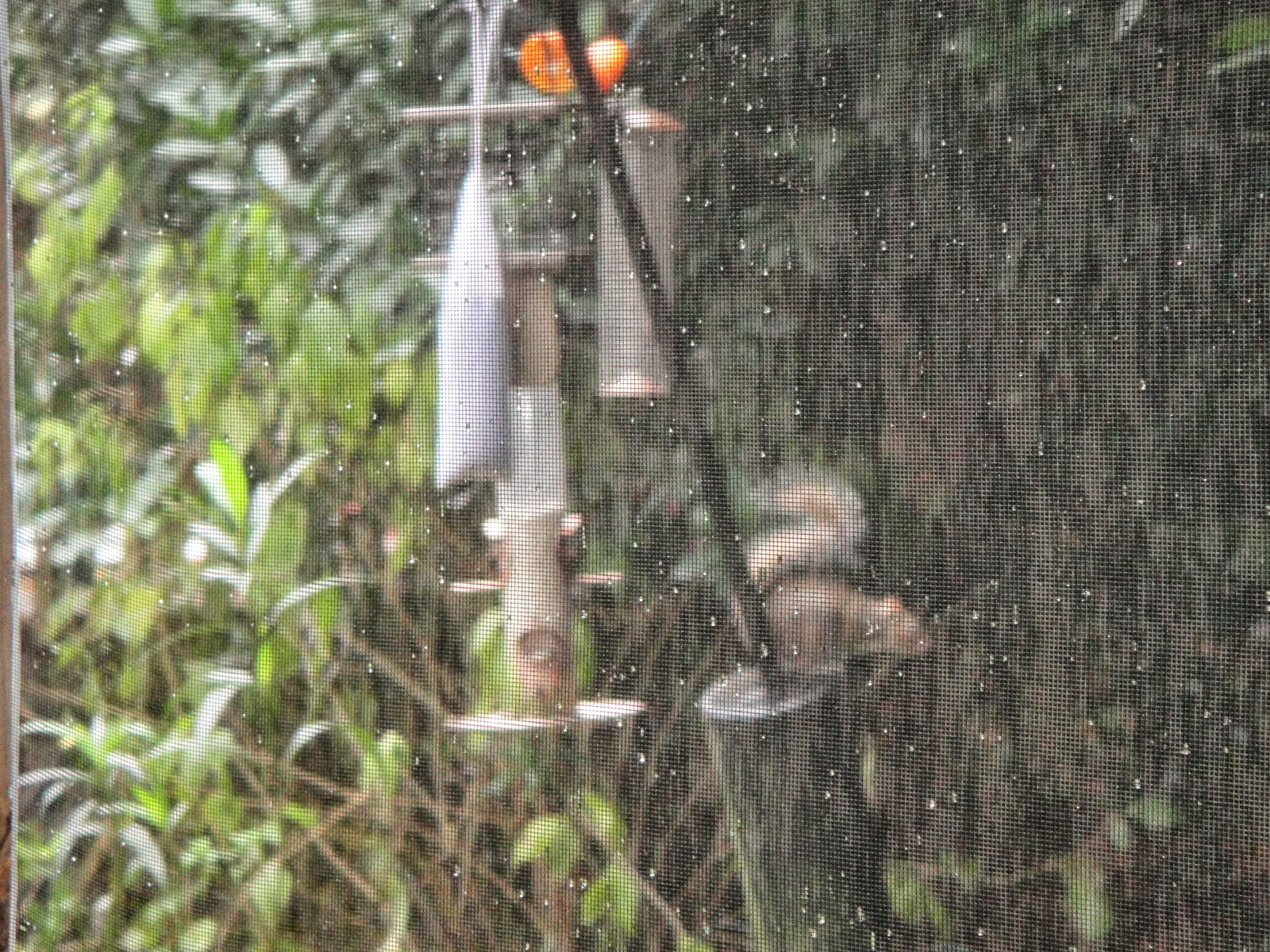
Bluebirds, Squirrels, and God


Every summer we have a nesting pair of birds to set up residence in the birdhouse in our backyard.  For many years, it was a purple martin house, though purple martins never used it. Great crested flycatchers found it and returned year after year. We knew they had arrived when we heard them in the trees. If they thought I was watching, they would fly away. Toward the end of the summer when the babies had fledged, the squirrels would move in and stay. When I took it down I found one large hole in the middle. The squirrels had remodeled the interior and the flycatchers had enjoyed a mansion for a home.

I replaced it with a bluebird house early spring last year. I wasn't sure if we would attract any bluebirds. When I saw a scout checking it out a few weeks later, I thought we might get lucky. After all, the birdhouse is located on prime real estate, what I would consider Park Place on a Monopoly board. It has a bird's eye view of our pool; the canopy of honeysuckles, red tips, cassia, and water oak; and a small flower garden of shrimp plants, milkweed, pentas, and philodendrons.

This spring, I took a peek inside the house. I knew I should buy a new one. The base it rested on was warped and it was only secured by a plastic bag tie; but I was busy and soon forgot about it.

The bluebirds arrived and began rebuilding their nest. I watched as they carried leaves, moss, and twigs into the hole. A few weeks later, the faint sounds of babies could be heard. I was excited once again to watch the back and forth ritual of the parents feeding them. However, when a few days passed and I didn't hear or see them, I became concerned. Did a predator get to them? I looked around the front yard to make sure I didn't see a dead bluebird.

I gave up the search when I saw the mother and father working on the nest again. They appeared to be undertaking a rebuilding project. Something had gone awry and they had started over.

Several days later I went out for my daily swim. When I glanced at the wooden house, I was greeted by two beady eyes staring out of the dark hole. They were much too big to be a bluebird's. Surprised, I examined the front of it and noticed the hole had been enlarged. It was big enough for one determined squirrel to squeeze into, though it was a tight fit. She was scrunched down as she stared out. She had usurped the bluebirds and now considered it her home.

It would have been comical if I had not seen the birds bringing in nesting material the day before. But what could I do? I got in the pool distracted and concerned. Was the squirrel sitting on the eggs, or worse, smothering the babies?

After a while I watched the male and female fly over to their nest. At the last minute, they halted their approach in midair. They backed up and flew over to a tree. It appeared they had no idea there was a squirrel inside their quarters. I was upset because the squirrel had the entire canopy in which to build her house.


I climbed out of the pool, grabbed the pole that I used for skimming the water, and angled it up to the birdhouse. The squirrel jumped out like she had been stung by a hornet. Wild eyes flashed as she scrambled past me, jumped from the fence into the thicket, and scurried off faster than a startled fish.


My job accomplished, I dipped back into the pool and swam to the far end. I hoped to see the bluebirds reclaim their territory, but they didn't return. Perhaps they were waiting for me to leave. It was getting dark anyway, so I got out, dried off, and went back inside to change.

Then I heard Joy's frantic scream, "Mamma, the bluebird house fell over."

"What?"

I ran out the backdoor. The box was partially burst open lying on the ground. The squirrel broke the plastic tie when he scrambled out of the tiny hole. Or maybe the birds had returned and knocked it to the ground. The house was destroyed beyond repair. Some nesting material had fallen out of the sides where the wooden boards had separated. I peered through the hole searching for baby birds or eggs, but to my dismay, instead, there were two baby squirrels inside. I did a double take because I expected to see baby birds. They were very small with no hair and couldn't have been more than a few days old.

Would the mother return? How could the squirrel have been using the house at the same time? The babies didn't appear to be hurt. At least they were moving around a little, as much as baby squirrels with their eyes closed can.

The nesting debris had cushioned the fall, though I wondered how so much "stuff" could fit into such a small space. We needed to figure out how to put the birdhouse back on the post. The base of it had rotted away and there was nothing to which we could mount it. I managed to force the sides of the box back together.


I set the house on the table by the pool and went out to the garage to find something we could use. Joy later told me she saw the mother squirrel return and leave. That was a good sign, I hoped, that she would come back. I found a roll of sticky blue tape that we had used to cover the windows during the last hurricane season. We could use a screw to latch it on the post and run the tape around the sides and underneath it. 

Joy and I climbed on top of the wooden fence and took turns pulling off tape and wrapping it like a band-aid. When we finished it was nighttime and we went back inside to watch.

A bluebird arrived immediately, but he refused to go in. He just sat outside the opening. We got tired of watching the perched bird, and he was in the shadows anyway. I went to bed thinking about baby squirrels, feeling guilty for my part in the disaster. I wondered what I would do if the mother did not return.

The next day I kept an eye out for her, but the birdhouse just baked in the sun with no squirrel to be seen. By late afternoon I had to do something. I took Joy to gym and went to visit a friend who takes care of orphaned animals.

I asked her if she would take them if I retrieved them. She reassured me she would. I ran home, climbed up on the railing once again, and brought the box down. I set it on the table and looked inside, but to my dismay, it was empty.
My friend said it was possible the mother might have returned that night or early in the morning. She explained that squirrels make several nests, so if one nest is overrun by ants or she is scared off, she has another one to which she can carry her babies.

I still felt sorry for the birds. I went to the store and bought a brand‑new bluebird house - one that a determined squirrel couldn't gnaw through. My neighbor come over later that evening and anchored it so it couldn't get knocked over again. My biggest regret was that I didn't do it sooner.

Sometimes God paints pictures of life lessons that can have many meanings.

If I was a bluebird, I would have doubted my ability to raise a family. Would I have the strength to try a third time?

If I was squirrel, I would have learned it doesn't pay to steal someone else's home. I needed to build my own.

But God had a different message for me - things may not always be as they appear. While I was expecting bluebirds, God delivered squirrels. How many times have I been so sure of myself only to find out later I was wrong? And maybe, just maybe, God wanted me to dive into the pool, enjoy a swim, and let Him take care of the animals.

Encore


Sunday was Easter. Today is Easter. Every day is Easter, from my point of view (and the point of view of some pretty reliable historic sources). True story. Because if what the Christian church says happened on Easter really happened, then every day after that is a repeat celebration. An encore. One more chance to stare up into the heavens in what really should be daily freaked-out surprise and say, "I can't believe you did that for me!" 

If Jesus truly--physically, spiritually, historically, existentially, and any other 'ly'--was dead and then wasn't anymore forever,  then today is still Easter. And that needs to mean something. Quite honestly, if such a thing happened, and you don't think it merits more than one day's notice in 365, you're not taking this whole life and death thing we're all in very seriously. 

At one point in my life, I did look at that cross in freaked-out surprise and say, "I can't believe you did that for me." I cried, right there in front of late night TV. No one had ever told me about Jesus, but somehow I knew. It happened when I was watching the movie Jesus Christ Superstar. Not a conventional conversion, I admit, but a fact. It took a few years of being around better people than I to realize exactly what that belief meant. I'm still working on it.

One thing a conviction that Easter is a daily celebration means is that we face those days with anticipation, not fear. My personal ministry revolves around helping people be freed from fear. Easter is the ultimate release from fear. Without Easter, I'd have nothing to say about fighting fears. I might try, and I might unleash all kinds of pop psychology to make you feel better temporarily, but really, without Easter, I've got nothing.

No More Running


On Easter, it seems appropriate to point out that fear comes from somewhere. It was never innate to human nature. Humans started this gripping emotion called fear by running away from God in the Garden of Eden. Why? Because they knew they had messed up, they knew He knew it, and they didn't know what He was going to do about it. 

It's the same basic principle that caused me to hide in my closet when I was eight and I skipped out on dishwashing duty to go out and play even though I knew that my name was clearly on that chore chart and my mom would find me. No one who knows in her soul that she has deliberately opted to go against the established order of rightness feels good about that choice for long. We may go through all kinds of emotional gymnastics to pretend and believe we do, but eventually that delusional behavior bites us from behind. How long we choose to run from it depends on how stubborn we are. 

We don't like accountability for our actions. We don't like the notion that any behavior could actually be wrong. (It's just different.) And we certainly have lost all enchantment with the word 'sin.' It's quaint but irrelevant. 

Except no matter how far or fast we try to run away, we have soul-deep-knowledge of a variety that won't be suppressed that there is wrong; that in fact, there is wrong in us, and it scares us. We hide, because our Parent might notice our name on that chart at any minute and realize we aren't doing our job.

Then hiding hits the blinding light of Easter, and it has to make a choice. Run farther into that dark closet, or stare at that cross in the morning sunlight and surrender to the inconceivable surprise that it happened because I couldn't stop hiding. And now I don't have to. 

Resistance Ts Futile (or at least dumb)


Personally,  I've come to realize that hiding in the closet because I'm afraid of the consequences of my own behavior comes with a few problems:

One, the anxiety about what my parent might do imprisons my soul. I could just go and find out and get it over with. But why do that when I can spend hours imagining it? Or a lifetime. (God's reply--“For the wages of sin is death, but the free gift of God is eternal life through Christ Jesus our Lord.” Romans 6.23)

Two, It locks my relationship into the realm of fear, when it could be transformed into the heathy thing it was meant to be--a parent and child teaching and growing. (Which is what God wants, too. “So you have not received a spirit that makes you fearful slaves. Instead, you received God’s Spirit when he adopted you as his own children. Now we call him, 'Abba, Father.' For his Spirit joins with our spirit to affirm that we are God’s children.” Romans 8.15-16)

Three, hiding becomes my default whenever I don't want to face something, robbing me of experiences outside the closet. (Which is not what God wants. “The Lord is my light and my salvation—so why should I be afraid? The Lord is my fortress, protecting me from danger, so why should I tremble?” Psalm 27.1)

Four, it's really hot and stuffy in an upstairs closet in a century-old house with no air conditioning. I think this may have been the beginning of my claustrophobia issues.


It's Easter. Still. Running was never part of the nature God intended for us. He proved it by walking straight into the consequences of our behavior, facing the terrors there, and blasting them to bits with one shove of a stone away from a tomb and a sunrise beyond our craziest dreams. Today, instead of turning around and going about your day like it's a normal day, look up. Stare into the sky. Say in freaked-out surprise, "I can't believe you did that for me." Yell it if you want to. Then close your eyes, and let the Easter light do its freeing work.

Thursday, April 9, 2015

Three Clues to Mystery Love

Questions about the things that drop us into unfathomable love.


I don’t claim to understand love. Romantic love begins the same for lovers who stay together six weeks or sixty years. At the initial encounter, the brain places an order for appetizers of estrogen and testosterone. We all know what that does to us. If the mind holds interest, the brain moves on to the main course—a hefty platter of adrenalin, dopamine, and serotonin. We dig in. We can’t think about anything else. If the mind decides to stick around long enough for dessert, the brain serves up a little oxytocin topped with a dollop of vasopressin. These hormones are released…well…think about the point in the meal when you eat dessert.

Is it all just a chemical reaction in the brain designed to propagate the species? And why is it that most of these delicious concoctions of the brain grow cold and stale?

Parental love is a different kind. Science still claims a role in the bonding of parent and child. Chemicals release in both newborn and new mother. As well, fathers bond with their offspring. More hormones for the proliferation of the species? While this relationship type appears less dependent on chemicals, its glue seems to hold even tighter than romantic love. But sometimes it does let go.

Jesus said there was no greater love than for a man to lay down his life for a friend. Science gives little insight into the brain’s participation in this kind of love, except to assure its root is survival of the human race. But what drives it?

These three love types give insight into the most mysterious kind of love. Both the realization of the love of God and the desire to express love to God are met with no firm systematic explanation. A determinate science may have the brain dishing out hormones. It may relate a heartfelt belief system to a more successful age in human history, or claim a poorly motivated God obsession brought the destruction of a society. But it cannot explain God love.

Back to that love between two people who catch fire in each other’s presence: As for the fire that burns out quickly, no further explanation is needed. Love didn’t stand a chance. But what about the old couple still holding hands and whispering things that would make a hormone-driven young romancer blush? When the love grows old, and the lovers grow old, why do they still love each other?

If nothing equals the deep bond of parental love, how can it fail? What causes a mother to abuse her baby? Or a father to murder his children?

What’s so important about the love for a friend? Not everyone would sacrifice themselves to save others, but many would. Is their capacity for love greater? Or do they have more brain fluid driving them? Why did Jesus say what He did? He was speaking to his friends. And He was about to deliver Himself over to Death for their sakes. They wouldn’t believe it, even though He told them.

Which brings me back to the love of God. We wouldn’t know He loves us—wouldn’t even know that He is—if He didn't tell us. But He did, and does, tell us. He tells us in the chemicals our brains produce. His purpose for the romance-inspiring stuff that flows inside us is to teach us about His love. The couples who keep on loving paint a picture of Christ’s love for His Church. The parent/child bond gives another sign of God’s love for us, and our dependence on Him. When we love those around us, we see a representation of Christ’s greater love for all mankind.

But what about the failures? What about mere lust that leaves destruction in its wake? Parental love that turns to terror? Love for a friend that’s so easily forgotten? Why, if love illustrates the story of the human race, does it get so messed up?

We’ve painted over it, colored it with fallible science, called it what it isn’t. Broken it into pieces. The world isn’t often appreciative of the beauty of true love, and we’re part of the messed up world. Even the redeemed wait entangled by sin until their story is over. Our eyes can’t see the thing for what it is. But God offers clues for discovering the bounty of His love.

For me, the beguiling love for my husband is clue number one. Then, the resilient love for my children. And third, the call to give myself away. At times I struggle like an earth-bound sinner with all of them, especially the last one. But even my unwillingness to lay down my life paints a picture. It shows me the stark contrast between God’s perfect love and my practice of it.

It might seem the first two clues would unravel the secrets of love, but it’s the third—the one too hard for me—that offers the greater sign. Jesus not only laid down His life for His friends, but for His enemies. I was His enemy. Now, I’m His friend. And that’s love. I can hold to it. I can delight in it. But I can’t explain it completely because love, for now, remains a mystery. A glorious…discovery-of-a-lifetime…mystery.


Wednesday, April 8, 2015

The Story Hasn’t Ended


“Then the other disciple, who reached the tomb first, also went in, and he saw and believed; for as yet they did not understand the scripture, that he must rise from the dead”—(John 20:8-9 NRSV).


Just as Jesus predicted, it happened. The story wasn’t over. In fact, it was just beginning. On that first Easter Sunday, “while it was still dark, Mary Magdalene came to the tomb and saw that the stone had been removed from the tomb” (John 20:1).

I don’t know about you, but like Mary Magdalene, I would have assumed someone had stolen the body. John tells us she immediately ran to Simon Peter and the other disciple—the one whom Jesus loved—and told them Jesus’ body was missing.

While Peter and the other disciple raced toward the tomb together, I wonder what they were thinking. Were they ready to begin a massive hunt for the body? Were they ready to fight whoever had removed Jesus’ remains? While we don’t know these answers, we know the other disciple—whom we believe is John—outran Peter, arriving at the tomb first. When he bent down to look in the tomb, he saw the linen wrappings lying there, but he didn’t go in.
 
I often wonder why this disciple didn’t enter the tomb. Was he afraid? Was he waiting on Peter?


When Simon Peter arrived, he went into the tomb. He, too, saw the linen wrappings and the cloth that had been wrapped around Jesus’ head. I wonder what Peter thought upon entering the tomb. Was he as perplexed as Mary and the other disciple?